Dancing (fancy)
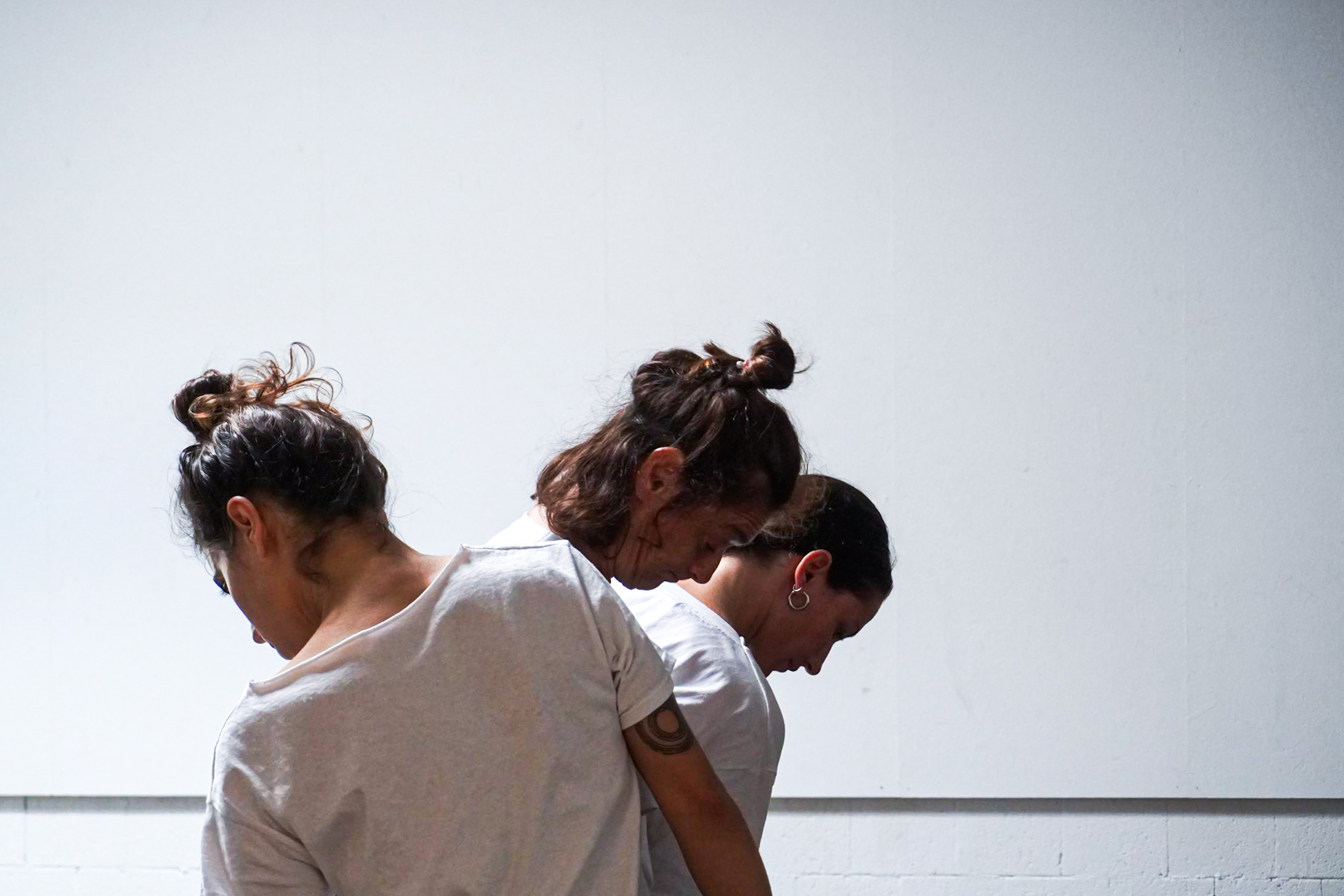
Dancing (fancy) aims to deepen the investigation into the body’s potentiality. The work makes a radical statement through the sheer presence of a disabled female body, asserting its right to claim space and agency from the moment it enters the stage.
The stepping stone for Maria Koliopoulou's new choreographic work is Gilles Deleuze's question: "What can a body do".
The choreography evolves into a field of temporal coexistence, where each body is constantly redefined through its relation to others.The acoustic environment—the sounds of breathing, movement, and spoken words— formed a sonic counterpoint that acted as a parallel universe to the visual action, ultimately unifying the coherence of the piece.
Dancing (fancy), initially researched at the Folkwang University of the Arts in Essen with the Tanzrecherche 2023 award, then in Cologne through the Culture Moves Europe support, premiered in Athens in 2023 with the support of the Greek Ministry of Culture, aims to deepen the investigation into the body’s potentiality.
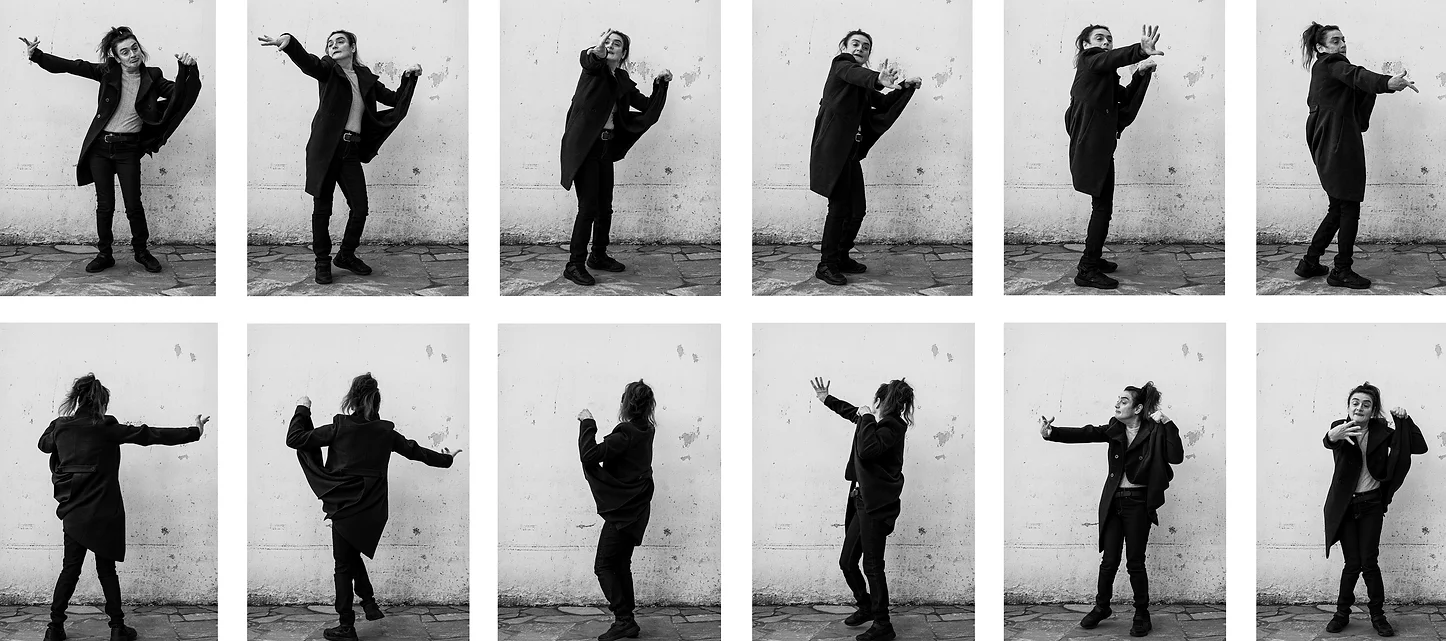
The work borrows its title from E. J. Muybridge's photographic work, 'Dancing fancy' from his 1887 book Human Locomotion.
Credits
Choreography Maria Koliopoulou
Performers Katerina Avramopoulou, Katerina Gevetzi, Loukiani Papadaki
Dramaturgy consultant Betina Panagiotara
Silent singing Anna Pagalou
Sound design Yiannis Isidorou
Lighting design Thomas Oikonomakos
Costume design Eleftheria Arapoglou_Digitaria
Artistic collaboration Mariza Vinieratou
Photos Elpida Tempou
Press Martha Koskina, Chrysa Matsagani
Production manager Cultόpια
Production Prosxima Dance Company
Premiere 27 September 2023, Bios, Athens.
Duration 35 min
Funded by the Greek Ministry of Culture & Sports 2022-2023 and Culture Moves Europe
‘Culture Moves Europe’ is a programme funded by the European Union and implemented by the Goethe Institut. This work was produced with the financial assistance of the European Union. The views expressed herein can in no way be taken to reflect the official opinion of the European Union.
Supported by Dance Research NRW, a scholarship of the NRW KULTURsekretariat – funded by the Ministerium fur Kultur und Wissenshaft des Landes Nordrhein - Westfalen
With the kind support of „iJuLa – intersektionale JugendLabore im Veedel“, a RRCGN project funded by the program “Demokratie leben!” by the German Federal Ministry for Family Affairs, Senior Citizens, Women and Youth; additional funding comes the Youth Ministry of the Federal State of North Rhine-Westphalia, DOHLE Foundation and the European Solidarity Corps.